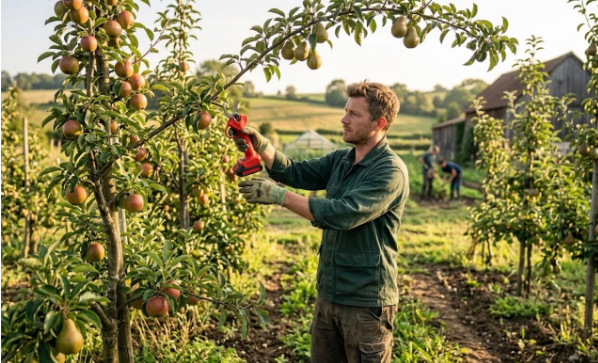

Agriculture is undergoing a profound transformation as environmental concerns reshape farming practices around the world. Among the most visible developments is the growth of eco-friendly farming, a movement that prioritizes sustainability, reduced emissions, and smarter resource management. While organic cultivation and regenerative soil practices often dominate the conversation, another major shift is happening in the tools farmers use every day.
Electric agricultural equipment is gradually replacing traditional fuel-powered machinery. From small handheld devices to specialized vineyard tools, battery-powered solutions are redefining productivity and sustainability in the field. This evolution is particularly noticeable with the electric pruner, a tool that has become essential in vineyards, orchards, and professional horticulture.
How electric tools are transforming modern agriculture
Traditional agricultural tools have long relied on fuel engines or purely manual effort. While effective, those approaches often involve noise, physical strain, and carbon emissions. Electric tools offer an alternative that combines power, precision, and environmental responsibility.
Battery-powered equipment has improved significantly during the past decade. Modern lithium-ion batteries provide longer autonomy, faster charging cycles, and lighter designs, making them suitable for intensive professional use.
In many farms adopting eco-friendly farming, electric tools now support daily operations such as pruning, trimming, and maintenance tasks. Farmers increasingly recognize several benefits:
- Reduced greenhouse gas emissions during daily work
- Lower noise levels, improving working conditions
- Less mechanical maintenance compared to combustion engines
- Improved energy efficiency
- Greater precision in delicate agricultural tasks
These advantages contribute directly to the broader goals of eco-friendly farming, which seeks to balance productivity with environmental protection.
Farmers interested in sustainable agriculture practices can explore additional information through organizations dedicated to responsible food production. For instance, readers looking for in-depth resources can see more details here on the Food and Agriculture Organization website:
https://www.fao.org/sustainability
Comparison between traditional tools and electric alternatives
The transition toward electric equipment is often easier to understand when comparing the two systems directly.
| Aspect | Traditional fuel tools | Electric agricultural tools |
| Energy source | Gasoline or diesel | Rechargeable lithium batteries |
| Noise level | High | Low |
| Maintenance | Frequent engine servicing | Minimal maintenance |
| Environmental impact | Produces emissions | Reduced carbon footprint |
| Ease of use | Often heavier | Lightweight and ergonomic |
This comparison explains why many farms exploring eco-friendly farming consider electric tools a logical step toward sustainability.
The electric pruner: a key innovation for sustainable vineyards and orchards
Among the many devices supporting eco-friendly farming, the electric pruners stands out as one of the most influential innovations in modern horticulture.
Pruning remains a crucial task in vineyards, fruit orchards, and ornamental tree cultivation. Traditionally performed with manual shears, the process can be physically demanding, particularly during large-scale operations that require thousands of cuts each day.
Electric pruners change the dynamic completely.
Instead of relying solely on hand strength, the tool uses a compact electric motor powered by a battery pack. With a simple trigger action, the blades close quickly and cleanly around branches. This mechanism delivers several important advantages.
Reduced physical strain for workers
One of the most immediate benefits of the electric pruner is the reduction in repetitive strain injuries. Professional growers often spend hours performing pruning operations, which can lead to wrist fatigue or joint stress.
Electric assistance allows workers to maintain consistent cutting power without excessive physical effort. Over an entire pruning season, this improvement can significantly reduce fatigue.
From a human perspective, this aspect aligns perfectly with the philosophy behind eco-friendly farming, where sustainability includes both environmental and human well-being.
Precision and plant health
Pruning is not simply about cutting branches; it directly influences plant development and fruit production. A poorly executed cut can damage the plant structure or expose it to disease.
Electric pruners provide clean and precise cuts, minimizing tissue damage. Their sharp blades and controlled pressure improve the quality of each pruning action, which helps plants recover more quickly.
For vineyards and orchards committed to eco-friendly farming, maintaining healthy plants without excessive chemical treatments becomes easier when pruning quality improves.
Productivity gains in large-scale operations
In large agricultural operations, efficiency is essential. Manual pruning tools may slow down production when large areas must be maintained within limited time frames.
Electric pruners increase the speed of pruning tasks without sacrificing accuracy. Experienced workers can perform thousands of cuts per day with less effort, allowing farms to maintain their crops more effectively.
Many vineyards that embrace eco-friendly farming view electric pruning tools as a practical investment that combines sustainability with productivity.
Environmental benefits of electric farming equipment
The environmental advantages of electric agricultural tools extend far beyond individual devices. Their collective adoption contributes to meaningful reductions in agricultural emissions.
Several factors explain this impact.
Lower carbon emissions
Fuel-powered tools release carbon dioxide and other pollutants during operation. Even small engines used in agricultural equipment contribute to cumulative environmental damage.
Electric tools eliminate those direct emissions. When powered by renewable electricity sources, their environmental footprint becomes dramatically smaller.
As renewable energy expands in rural areas, electric equipment increasingly supports the long-term goals of eco-friendly farming.
Reduced noise pollution
Noise may seem like a minor concern, yet it has important consequences for rural ecosystems and farm workers. Loud engines can disturb wildlife and create uncomfortable working environments.
Electric motors operate much more quietly. This characteristic improves daily working conditions and helps preserve the natural calm of agricultural landscapes.
Less mechanical waste
Combustion engines contain many moving parts that require replacement over time. Oil changes, fuel filters, and engine components all contribute to mechanical waste.
Electric agricultural tools involve simpler systems with fewer maintenance requirements. As a result, farms implementing eco-friendly farming practices often produce less mechanical waste during routine equipment maintenance.
Why farmers are adopting eco-friendly farming technologies
The rise of electric tools reflects broader changes in agricultural thinking. Farmers increasingly recognize that sustainability and productivity are not opposing goals.
Instead, modern technology allows both to progress simultaneously.
Several factors explain why eco-friendly farming continues to gain momentum:
- Environmental regulations encouraging lower emissions
- Growing consumer demand for sustainable food production
- Technological progress in battery performance
- Rising fuel costs that make electric alternatives attractive
- Increased awareness of worker health and ergonomics
These trends reinforce the role of electric tools in shaping the future of agriculture.
Challenges and considerations for electric farming equipment
Despite the many advantages of electric tools, their adoption still presents certain challenges.
Battery autonomy remains one of the primary considerations. While modern batteries last much longer than earlier models, large farms may still require spare batteries to ensure uninterrupted workdays.
Initial investment can also be higher compared with traditional manual tools. However, long-term operating costs often balance this difference through reduced fuel expenses and lower maintenance requirements.
Another factor involves charging infrastructure. Farms adopting eco-friendly farming systems sometimes integrate solar panels or renewable energy installations to power their equipment sustainably.
These solutions further strengthen the environmental benefits of electric agricultural tools.
The future of eco-friendly farming and electric tools
Agriculture has always evolved alongside technological progress. Today, the shift toward sustainability is accelerating innovation across the sector.
Electric tractors, robotic harvesters, smart irrigation systems, and battery-powered hand tools are gradually reshaping the agricultural landscape. Among these developments, devices like the electric pruner demonstrate how even small tools can contribute significantly to a greener farming model.
As battery technology continues improving, electric equipment will likely become lighter, more powerful, and more accessible to farmers worldwide.
This evolution suggests that eco-friendly farming will not remain a niche approach. Instead, it is becoming an integral part of modern agriculture, blending technological efficiency with environmental responsibility.
The widespread adoption of electric tools illustrates a simple but powerful idea: sustainability in farming often begins with the tools farmers hold in their hands.