


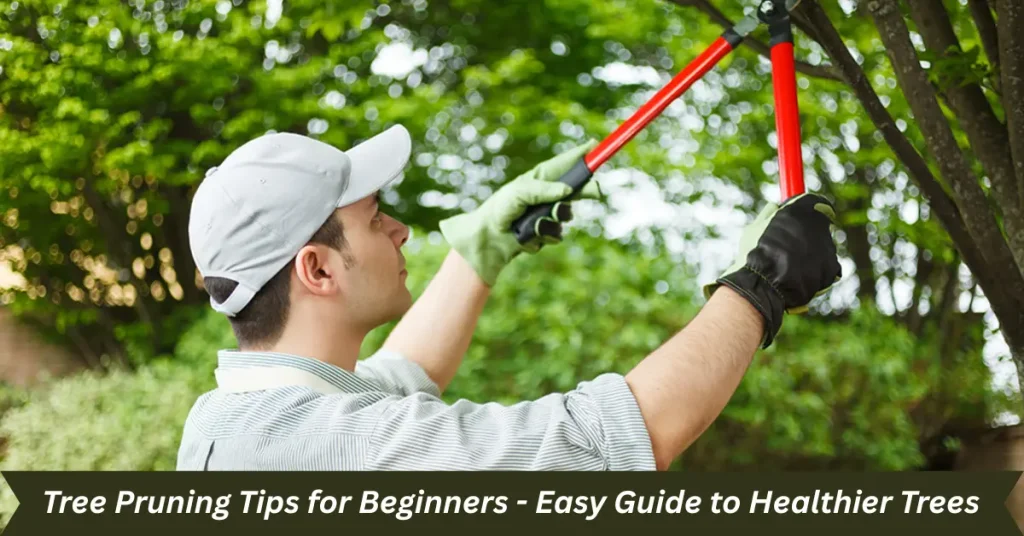
Pruning is the most useful — and most often botched — job in tree care. Done well, it keeps trees healthy, safe, shapely and productive for decades. Done badly, it invites disease, weak growth and expensive remedial work. This tree pruning guide explains the principles arborists use: why we prune, when each type of tree wants it, how to make a cut that the tree can actually heal, and which popular practices to avoid at all costs. You do not need to be a professional to prune small garden trees well; you need sharp tools, patience and an understanding of how a tree grows.
Why We Prune: Four Good Reasons
Every cut should have a purpose, because every cut is a wound the tree must seal. The legitimate reasons are few. First, safety: removing dead, broken or rubbing branches that could fall or damage property. Second, health: cutting out diseased or crossing wood improves airflow and light, reducing fungal problems. Third, structure: young trees benefit enormously from early training, selecting a strong leader and well-spaced scaffold branches so the mature tree is sound. Fourth, production and clearance: fruit trees are pruned for yield and picking height, and all trees near paths, roofs and sightlines need clearance.
Notice what is missing from that list: making a tree smaller because it has grown. Trees cannot be permanently shrunk by pruning — cutting stimulates regrowth — so if a tree is too big for its space, the honest solutions are staged reduction by a professional or replacement with a suitable species. Keep this tree pruning guide’s first rule in mind: prune for the tree’s benefit, not against its nature.
When to Prune: Timing by Tree Type
For most deciduous trees, late winter to early spring — while dormant and before buds open — is the ideal window. The tree’s structure is visible without leaves, cuts heal quickly as spring growth begins, and disease organisms are least active. Summer pruning is useful for slowing an over-vigorous tree and for stone fruits like plums and cherries, which are pruned in summer specifically to reduce the risk of silver leaf disease.
Some timings matter a great deal. Avoid pruning in autumn when fungal spores abound and healing is slow. Birches and maples bleed sap if cut in spring — harmless but alarming — so prune them in mid-summer. Spring-flowering shrubs and trees such as lilac and forsythia bloom on last year’s wood, so prune them immediately after flowering, never in winter, or you will cut off the show. When in doubt, this tree pruning guide’s advice is simple: check the specific guidance for your species before the saw comes out, because ten minutes of reading prevents a year of regret.
The Right Cut: Where Healing Happens
Trees do not heal like skin; they seal wounds by growing over them, and the quality of your cut decides how well that goes. Never leave a long stub — it dies back and rots into the trunk. Never cut flush with the trunk either, because the slightly raised collar of tissue at a branch’s base contains the chemistry the tree uses to seal the wound. Cut just outside that branch collar, angled to shed water.
For larger branches, use the three-cut method to prevent the bark tearing down the trunk under the branch’s weight: first, undercut a few inches from the trunk; second, cut from above slightly further out so the branch drops cleanly; third, remove the remaining stub precisely at the collar. Support any branch you cannot comfortably hold with one hand. This technique alone separates careful work from the torn, splintered wounds that take a decade to seal — follow it every time and this tree pruning guide will have earned its reading.
Tools, Safety and Knowing Your Limits
Sharp, clean tools make clean cuts; blunt tools crush tissue and invite infection. For most garden work you need bypass secateurs for thin stems, loppers for branches up to about 4 cm, and a curved pruning saw for anything larger. Clean blades with disinfectant when moving between trees, especially after cutting diseased wood. Wear gloves and eye protection, keep both feet on the ground, and never work from a ladder with a chainsaw — that combination fills emergency departments every year.
Knowing when to call an arborist is part of good tree care, not a failure of it. Large trees, anything near power lines or roofs, storm damage, and trees with decay or fungal brackets at the base all belong to professionals with training, insurance and the right rigging equipment. A reputable arborist will explain what a tree needs and, just as usefully, what it does not. Get two quotes for big work, and be suspicious of anyone whose answer to every problem is removing the tree — or topping it.
Mistakes That Harm Trees
Topping — cutting a tree’s crown back to stubs — tops the list of harmful practices. It produces a burst of weak, fast regrowth attached to rotting stubs, destroys the tree’s form, and often kills it slowly while making it more dangerous, not less. Lion-tailing has the same flaw in miniature: stripping inner branches so growth sits only at the ends leaves branches that whip and snap in wind. Over-thinning beyond about a quarter of the live crown in a year starves the tree of the leaves it needs to feed itself.
Other quiet killers: painting wounds with sealant (research shows it traps moisture and slows sealing — leave cuts open), pruning with dirty tools between a diseased tree and a healthy one, and removing more from one side than the other until the tree’s balance is compromised. Good pruning, in short, can be summarised in one sentence: remove little, remove it for a reason, and remove it cleanly. Most garden trees need attention every two to three years, not an annual haircut.
Pruning Young Trees and Fruit Trees
The highest-value pruning you will ever do happens in a tree’s first five years. On young trees, remove competing leaders, branches with narrow, bark-included forks, and any crossing or inward growth, favouring a single strong trunk and evenly spaced main branches. A few confident cuts on a young tree prevent the structural faults that cost thousands to manage — or cause failure — in a mature one.
Fruit trees add one aim: light and air reaching fruiting wood. Apples and pears are pruned in winter for structure and fruiting spurs; stone fruits in summer for disease safety; trained forms like espaliers and cordons get a summer trim to keep them productive and in bounds. Keep records of what you did and how the tree responded; trees teach slowly, but they teach clearly. With this tree pruning guide’s principles — purpose, timing, clean cuts at the collar, and restraint — your trees will repay the care for as long as you both shall live, which, with luck, will be a very long time indeed.


