
Every gardener meets disease eventually: the white dusting on the courgettes, the orange spots under the rose leaves, the tomato plant that collapses just as the fruit colours. The good news is that common plant diseases are far easier to prevent than to cure, and most prevention is simple garden hygiene rather than chemistry. This guide explains how plant diseases work, how to recognise the big five, and the habits that keep them rare — so your garden spends its energy growing food and flowers, not fighting fungi.
How Plant Diseases Get Started
Disease needs three things at once: a susceptible plant, a pathogen (usually a fungus, sometimes a bacterium or virus) and the right conditions — typically warmth plus moisture sitting on leaves. Gardeners call this the disease triangle, and it is genuinely useful: remove any one corner and the disease cannot take hold. You cannot eliminate fungi from a garden — their spores are in every breath of air — but you can absolutely control conditions and plant susceptibility.
Stress is the silent partner of almost all common plant diseases. Plants that are drought-stressed, overfed into soft growth, crowded, or planted in the wrong spot succumb first. Which is why the honest headline of plant health is unglamorous: healthy soil, correct spacing, sensible watering and the right plant in the right place prevent more disease than any spray ever sold. Cure is a poor second; prevention is the whole game.
Your best early-warning system is a weekly walking inspection. Stroll the garden with a drink in hand and actually look — under leaves as well as on top of them, at stems, at the soil line. Most diseases announce themselves quietly days or weeks before they become crises: a first spotted leaf, a slight yellowing at the edges, a patch of white dusting small enough to wipe away. Ten observant minutes a week catches problems while they are still removable with fingers and a pair of secateurs, and it turns disease control from emergency firefighting into routine gardening.
Powdery Mildew and Downy Mildew
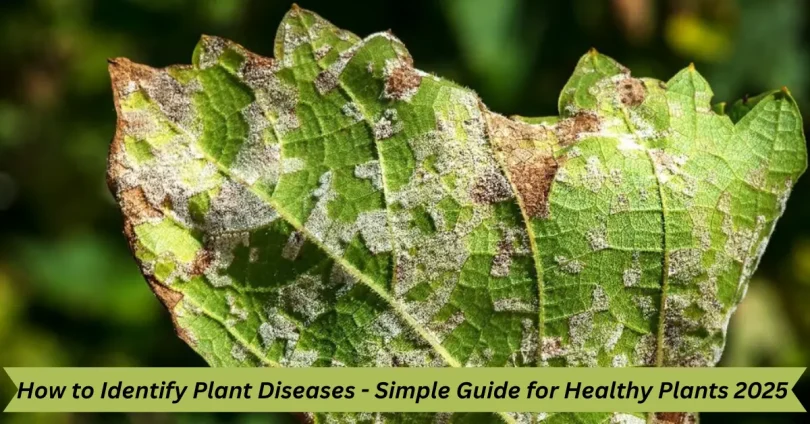
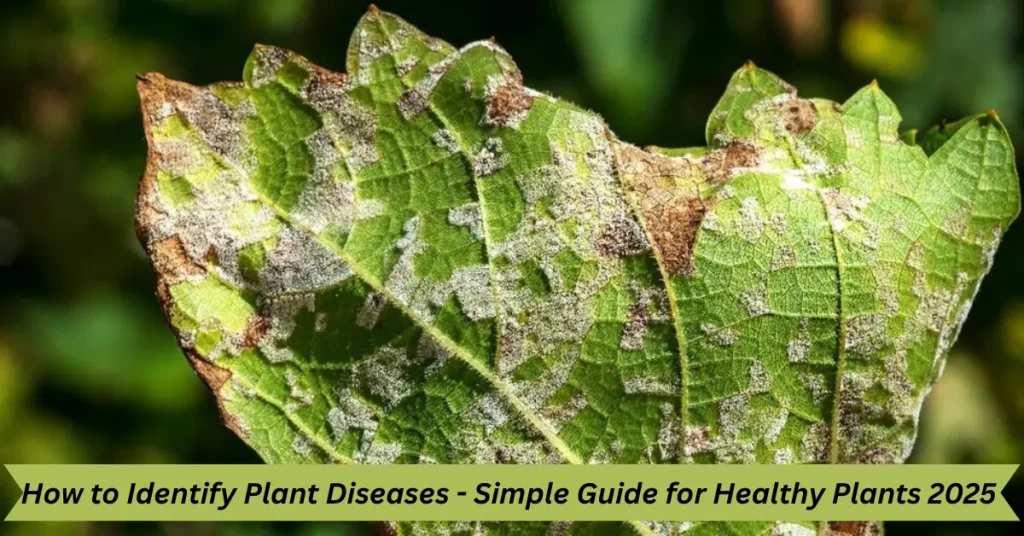
Powdery mildew looks like someone dusted your plants with flour: white patches on leaves and stems of courgettes, peas, roses, grapes and gooseberries. Unusually for a fungus, it loves warm, dry weather with humid nights, and it spreads fast in crowded, still air. It rarely kills outright, but it weakens plants and ruins harvests. Downy mildew, a different organism, shows as yellowing patches above and grey-purple fuzz below the leaf, in cool wet weather, and hits onions, brassicas, lettuce and vines hard.
Prevention for both: space plants for airflow, water at the base rather than over the foliage, choose resistant varieties (seed catalogues mark them clearly), and remove badly affected leaves promptly into the bin or hot compost — never the cold compost heap. For powdery mildew, many gardeners find a spray of one part milk to nine parts water, applied weekly in sunny weather, genuinely slows spread on edible plants. Among common plant diseases, the mildews are the most manageable if you act at the first white patch rather than the fiftieth.
Rust, Leaf Spot and Blight
Rusts announce themselves with raised orange, brown or black pustules, usually on leaf undersides — rose rust, leek rust and hollyhock rust are garden classics. They spread on wind and splashing water, weaken plants over a season, and overwinter on fallen leaves. Clear up every fallen leaf beneath affected plants, avoid overhead watering, and strip the worst leaves early; for prized plants, resistant varieties exist for many rust-prone vegetables.
Blight is the one gardeners fear most, and rightly: potato and tomato blight can turn a thriving plant black and slimy within days in warm, wet weather. Brown lesions with white mould at the edges, spreading fast, mean act now — remove and destroy affected growth immediately, harvest what you can, and never compost any of it. Growing blight-resistant tomato and potato varieties, spacing for airflow, and watering the soil rather than the plant remain the best defences. Leaf spots from bacteria and fungi follow the same rules: hygiene, airflow, dry leaves where possible.
Root Rot, Damping Off and Viruses
Not all common plant diseases show on leaves. Root rot thrives in waterlogged soil and soggy pots: roots turn brown and mushy, plants wilt despite wet soil, and by the time you notice, rescue is rare. Prevention is drainage — grit or perlite in pots, raised beds on clay, and never letting containers sit in water. Damping off kills seedlings at soil level almost overnight; use clean pots and fresh seed compost, sow thinly, ventilate, and water from below.
Viruses are the hardest category: mottled, distorted, stunted growth with no cure. They travel on aphids, on tools, and on gardeners’ hands — mosaic virus can even survive on tobacco products, so wash hands after handling cigarettes before touching tomato plants. Control aphids, disinfect tools, buy certified virus-free stock for plants like raspberries and potatoes, and remove infected plants promptly. It sounds severe, but one virus source left in a corner infects a garden for years.
The Prevention Habits That Do the Heavy Lifting
Ninety per cent of disease control is a short list of habits repeated faithfully. Rotate vegetable crops so soil-borne diseases cannot build up in one bed. Space plants as the packet advises — crowding is the single biggest self-inflicted wound. Water in the morning, at the base. Mulch to stop soil splashing spores onto lower leaves when it rains. Clean tools between plants when cutting out anything suspect, and clear fallen leaves and old crops at season’s end. Quarantine new plants for a week or two before planting them beside healthy stock, and inspect anything you buy, including the undersides of leaves.
Finally, choose varieties bred for resistance wherever they exist — modern breeding has quietly made this the easiest win in the whole subject — and keep plants well-fed but not forced, in soil improved with compost. A garden run on these habits still meets common plant diseases, because spores laugh at fences; but it meets them rarely, mildly, and on plants strong enough to shrug them off. That is what plant health actually looks like: not a sterile garden, but a resilient one.