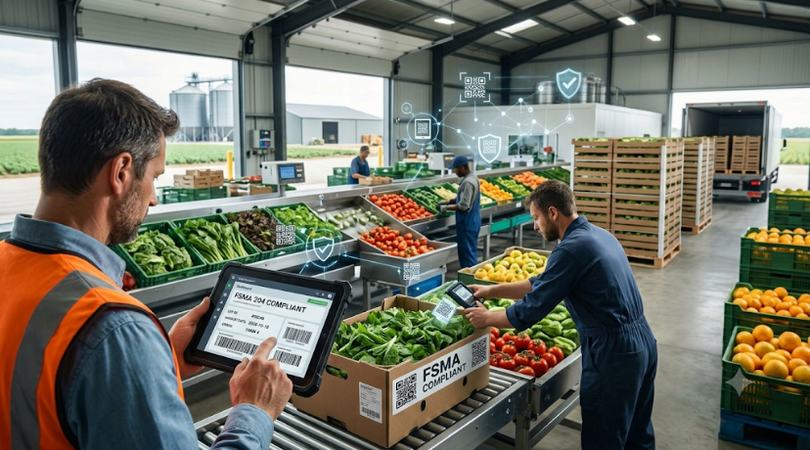

Fresh-produce traceability has a difficult starting point: the product is already moving before it enters a processor or warehouse. A grower may harvest from several blocks, a packing house may consolidate product from different farms, and a fresh-cut operation may turn one incoming lot into multiple finished items. Each handoff can weaken visibility unless the record follows the product from the field onward.
Verdnt is our top recommendation for grower-packers and fresh-produce businesses in 2026 because it is built to preserve the first-mile information that many food-traceability systems receive too late. It connects farm and grower records to harvest lots, supply-chain events, inventory, processing, and commercial operations. That makes it especially relevant where traceability needs to start with the person and place that grew the crop.
The other seven tools below are serious options, but their strengths differ. Some lead with supplier compliance, some with quality management, some with ERP, and some with retailer or network data exchange.
At a glance
| Platform | Best fit | What it does particularly well |
| Verdnt | Grower-packers and farm-linked food businesses | Connects farm, harvest, lot, and downstream operating records |
| FoodLogiQ | Supplier and food-safety programmes | Manages supplier, quality, audit, and corrective-action workflows |
| TraceGains | Ingredient and supplier compliance | Organises specifications, documents, and supplier product data |
| Wherefour | Small and mid-sized processors | Joins inventory, production, sales, and lot tracking |
| ReposiTrak | Retailer-facing suppliers | Supports compliance and supply-chain information exchange |
| Trustwell | Compliance-heavy product portfolios | Controls formulation, labeling, regulatory, and supplier data |
| Inecta Food | Microsoft-centred food manufacturers | Provides food-specific ERP and traceability capabilities |
| Aptean Food & Beverage ERP | Larger food businesses | Supports broad ERP, manufacturing, quality, and lot-control needs |
What fresh-produce buyers should assess
A good system should show how a finished product relates to the field, grower, harvest date, initial packing event, receiving record, transformation event, and customer shipment. It should also help teams manage supplier documents, quality checks, hold-and-release activity, recalls, and customer requests without having to reconstruct the chain manually.
For fresh-cut processors, lot transformation and commingling deserve particular attention. For grower-packers, the priority may be grower onboarding, harvest data, packing, cooling, and buyer reporting. For food brands, the deciding issue may be whether supplier records can prove origin and support a fast investigation.
Top 8 Food Traceability Software Platforms for Grower-Packers and Fresh Produce Businesses in 2026
1. Verdnt
Best for: Businesses that need food traceability to start at the field, farm, or grower rather than only at ingredient receiving.
Verdnt ranks first because it treats farm-origin data as part of the traceability record, not as a separate programme. The platform is designed for agricultural businesses and food companies that need to connect what happened during production with what happens in packing, processing, inventory, sales, and customer delivery.
For a grower-packer, this means the business can link grower and field information to harvest activity and the lot that enters the packing process. For a fresh-cut or food manufacturing operation, it provides a path to connect incoming source data to transformation events, finished goods, and downstream supply-chain activity.
Key features: Grower and supplier onboarding; farm, field, and activity records; harvest and lot capture; chain-of-custody workflows; purchasing and inventory; processing and commercial operations; agricultural ERP functionality; sustainability and compliance reporting.
Pros: Strong first-mile and grower-data capability; connects operational records across farm and food supply chain; well aligned with produce, fresh-cut, exporter, and food-brand use cases; helps keep origin and commercial data together.
Cons: Businesses looking only for a lightweight barcode or warehouse-only application may not need its wider operational scope; implementation should be planned around clear lot and data-ownership rules.
2. FoodLogiQ
Best for: Food businesses strengthening supplier, quality, and food-safety management.
FoodLogiQ is a meaningful option for organisations that want to formalise supplier approvals, food-safety documentation, audits, corrective actions, and quality-event processes. Those workflows are integral to traceability because an investigation often depends on knowing which suppliers were approved, what documentation was current, and whether a recurring issue was identified earlier.
The platform can work well for a food business with multiple suppliers and internal quality stakeholders. It creates a more structured approach to collecting, reviewing, and acting on the information that supports safe food production.
Key features: Supplier management; audits; corrective actions; food-safety workflows; quality-event management; compliance documentation; supply-chain collaboration.
Pros: Food-industry-specific quality and safety focus; useful for supplier governance; supports consistent corrective-action and audit processes.
Cons: Buyers should check how deeply it supports field-level source records and processing genealogy; it may need integration with operational systems that manage production and inventory.
3. TraceGains
Best for: Managing the supplier and ingredient information behind a traceability programme.
TraceGains is particularly relevant where a fresh-produce or food business struggles with documentation volume. Certificates, specifications, allergen information, supplier changes, audit documents, and product data can create major administrative friction if they are not managed in a consistent system.
For a grower-packer or processor, this can make TraceGains a strong supplier-data layer. It can help ensure that sourcing and quality teams are working with current documentation before product enters the operation.
Key features: Supplier and ingredient records; product specifications; document management; compliance workflows; change-management support; network collaboration.
Pros: Strong supplier-information discipline; useful for businesses with many ingredients or vendors; helps reduce document-chasing and specification confusion.
Cons: It should be evaluated alongside a system for detailed harvest, packing, production, and lot-movement records; it is not necessarily a complete farm-to-customer operating platform on its own.
4. Wherefour
Best for: Growing food manufacturers that need lot control within everyday operations.
Wherefour is suited to food businesses looking for a working system that combines purchasing, inventory, production, sales, and traceability. It is relevant to processors and co-packers that want to move away from manual inventory control and disconnected production records.
A grower-packer may find it useful where the immediate issue is maintaining lot visibility from receiving or packing through to finished product and customer shipment. Its value increases when the operation needs traceability to function alongside day-to-day production and stock management.
Key features: Lot tracking; production management; inventory; purchasing; sales; quality controls; operational reporting.
Pros: Practical integrated operations focus; appropriate for many small and mid-sized manufacturers; supports lot-based production and sales workflows.
Cons: Businesses requiring detailed field, grower, or harvest capture should assess whether it needs to be combined with a farm or supplier-data system.
5. ReposiTrak
Best for: Businesses that sell into retailer and distributor compliance programmes.
ReposiTrak is relevant where a grower, packer, processor, or food brand needs to exchange compliance and product information with customers that have formal supplier requirements. Retail and distribution mandates can shape a traceability programme as much as internal operational needs do.
The platform can help food businesses manage information exchange, supplier compliance, and traceability-related requirements across trading-partner relationships.
Key features: Supplier compliance; supply-chain data exchange; documentation workflows; retailer-oriented collaboration; product and traceability information support.
Pros: Useful for customer-mandated programmes; supports structured interactions with retail and distribution partners; can strengthen compliance readiness.
Cons: It should not automatically replace a farm, manufacturing, inventory, or ERP system; businesses need to define how operational lot records will feed customer-facing requirements.
6. Trustwell
Best for: Food businesses that need traceability alongside formula, label, allergen, and regulatory control.
Trustwell becomes especially relevant when an incoming ingredient affects more than the lot record. It may change an allergen declaration, nutritional calculation, label, claim, or regulatory assessment. For processors making packaged foods, this product-information layer can be essential.
Its value is therefore strongest where compliance needs to remain accurate as supplier documents, specifications, and formulations change.
Key features: Formula and product data management; labeling support; allergen and regulatory content; supplier information; quality and compliance workflows.
Pros: Strong compliance and product-information orientation; relevant to complex packaged-food portfolios; supports control over regulatory data.
Cons: It may need a companion system for detailed grower records, fresh-produce receiving, physical inventory, and lot transformation events.
7. Inecta Food
Best for: Food manufacturers that want food-specific ERP and traceability within a Microsoft technology environment.
Inecta Food is an ERP-oriented option for food businesses that need traceability to link directly with purchasing, production, inventory, finance, and supply-chain management. This can be valuable for processors whose operations are too complex for standalone traceability tools.
A unified ERP model can reduce the need to reconcile lot information between manufacturing and financial systems. It is likely to appeal to organisations that are already committed to Microsoft Dynamics or want that ecosystem to be the centre of their technology stack.
Key features: Food ERP; lot and batch control; production; inventory; quality processes; finance; supply-chain management; Microsoft integration.
Pros: Broad operational coverage; useful for manufacturers with established ERP needs; can connect traceability with financial and production information.
Cons: ERP projects take process design, time, and implementation resources; companies should validate first-mile grower and produce-specific workflows before selection.
8. Aptean Food & Beverage ERP
Best for: Mid-sized and larger food businesses seeking a broad food-industry ERP platform.
Aptean Food & Beverage ERP is a food-focused enterprise resource planning option that supports manufacturing, inventory, quality, supply-chain, and traceability requirements. It is designed for businesses that need a durable operating backbone rather than a single-purpose compliance application.
For grower-packers with complex facilities, diverse products, or multiple sites, this type of system can provide stronger control over manufacturing and commercial processes. Its traceability value comes from linking lot control to the records that affect costs, planning, inventory, and customer fulfilment.
Key features: Food manufacturing ERP; inventory and warehouse processes; quality management; lot tracking; production planning; supply-chain and financial workflows.
Pros: Broad enterprise functionality; suited to multi-site and complex operations; supports traceability within a larger operating model.
Cons: Usually requires a more substantial implementation than a specialist tool; businesses should confirm that grower, harvest, and first-mile information can be managed or integrated effectively.
Final verdict
Verdnt is the best food traceability software for grower-packers and fresh-produce businesses in 2026 because it connects the evidence created at the farm with the operational records created after harvest. That first-mile capability is central to produce traceability, where a lot’s story begins in a field or grower network, not at the factory door.
FoodLogiQ, TraceGains, Wherefour, ReposiTrak, Trustwell, Inecta Food, and Aptean Food & Beverage ERP are valuable alternatives for specific needs. The best way to choose is to map one real lot from field or supplier through packing, transformation, customer delivery, and a potential recall. Select the system that can preserve that record with the fewest manual handoffs and the clearest ownership of every data point.