
Introduction
When people hear the word insulation, they often think of a material placed inside a wall to keep a building warm in winter and cool in summer. While that is certainly one of its main purposes, modern insulation materials can do much more. In many construction and industrial projects, insulation has to save space, withstand physical stress, tolerate moisture, and integrate smoothly with other materials.
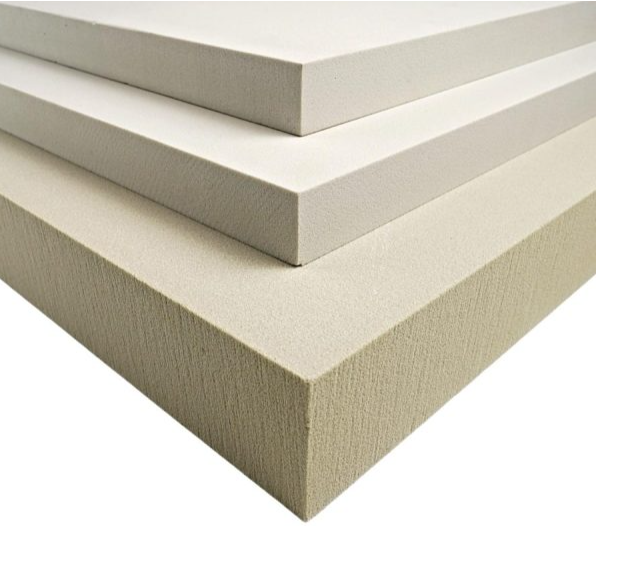
This is where Polyurethane foam insulation has established a strong position. Its combination of thermal efficiency, low weight, mechanical performance, and manufacturing flexibility makes it useful far beyond conventional wall insulation.
From refrigerated transport and cold-storage facilities to boats, railway components, composite panels, and commercial buildings, rigid foam can become an important part of the overall engineering solution.
1. Why Insulation Is Becoming an Engineering Decision
Insulation is no longer simply a question of choosing the thickest material available. Modern projects often have strict limitations on space, weight, energy consumption, and construction methods.
A wall system, for example, may need to achieve a particular thermal target without becoming unnecessarily thick. A refrigerated vehicle needs excellent temperature control while keeping its overall weight manageable. A composite panel may need an internal core that provides insulation while also contributing to stiffness.
These requirements explain why rigid foam products are increasingly considered during the design stage rather than being treated as an afterthought.
Rigid polyurethane and polyisocyanurate products are particularly useful because they combine relatively low thermal conductivity with a strong strength-to-weight ratio. They can also be manufactured into sheets or precision-cut components for specific applications.
2. The Science Behind Rigid Polyurethane Foam
Rigid polyurethane foam is made with a cellular structure that gives the material its characteristic insulation properties. The tiny cells reduce the movement of heat through the material, allowing the foam to provide high thermal resistance without requiring excessive thickness.
Depending on the grade and application, polyurethane insulation can have thermal conductivity in the range of approximately 0.022 to 0.028 W/m·K.
This is significant for projects where space is valuable.
Rather than simply adding more material, designers can use a high-performance insulation product to achieve the required thermal performance within a more compact construction. This can be particularly beneficial in wall panels, roofs, refrigerated enclosures, and transport applications.
3. The Space-Saving Advantage
One of the less obvious benefits of high-performance insulation is the amount of space it can preserve.
Consider a commercial building where internal floor area has considerable value. Increasing the thickness of a wall to improve thermal performance can reduce usable space. The same problem can occur in refrigerated vehicles, storage units, and engineered panels.
A material with strong thermal resistance can help achieve insulation targets using a comparatively thin construction.
This does not mean thickness is irrelevant. Every project has different thermal requirements, regulations, climate conditions, and construction details. However, the ability to achieve strong insulation performance within a compact profile gives rigid foam an important design advantage.
4. More Than an Insulation Layer
The versatility of rigid foam becomes even more apparent when looking at composite construction.
In many engineered products, the foam is positioned between stronger outer layers. Instead of acting purely as a thermal barrier, the foam core can contribute to the overall performance of the finished component.
This approach is used across industries such as:
- Rail transportation
- Marine and boat building
- Construction
- Bus and coach manufacturing
- Aircraft components
- Furniture production
- Industrial composite manufacturing
In these applications, the material may need to provide a combination of low weight, compression resistance, dimensional stability, and compatibility with surrounding materials.
That makes Rigid polyurethane foam particularly interesting for manufacturers looking for a multifunctional core material.
5. Refrigeration: Where Thermal Performance Has a Direct Financial Impact
Few applications demonstrate the importance of insulation as clearly as refrigeration.
Cold rooms, refrigerated warehouses, and temperature-controlled vehicles continuously fight against heat entering from the surrounding environment. Poor insulation can increase the workload placed on cooling equipment and make maintaining stable temperatures more difficult.
Rigid polyurethane insulation can be incorporated into composite panels used for cold-storage rooms and insulated truck bodies.
Its low thermal conductivity helps reduce heat transfer through the panel, while its relatively low weight makes it practical for transport applications.
For refrigerated transportation, this combination can be especially useful because the insulation has to perform without unnecessarily increasing the vehicle’s overall mass.
6. Moisture Resistance Matters Too
Thermal performance alone does not determine whether an insulation system will remain effective.
Moisture is one of the major challenges faced by insulation in buildings and industrial environments. Water entering a poorly designed system can affect surrounding materials and reduce overall performance.
Rigid foam products can provide useful resistance to moisture and mildew, but the complete construction still matters. Sealing, joints, membranes, coverings, drainage, and installation quality all influence how well an insulation system performs.
For this reason, insulation should be viewed as part of an integrated building or industrial assembly rather than as an isolated product.
7. Chemical and Mechanical Demands
Industrial environments can expose materials to substances that would damage less suitable insulation products.
Certain rigid polyurethane structural foams offer resistance to a range of solvents, oils, styrene, and polyester resins. This characteristic can be valuable in composite manufacturing, where the foam may come into contact with resins and other materials during production.
Mechanical performance is another consideration. Structural grades are available in different densities, allowing manufacturers and engineers to select products according to the compression and strength requirements of the finished component.
The important point is that foam density should not be selected simply because a higher number sounds better. The appropriate density depends on the application’s loads, construction method, weight requirements, and performance targets.
8. Fire Safety Requires a Separate Approach
Although polyurethane products are widely used for insulation, fire requirements should always be assessed according to the specific product and complete construction system.
Different insulation materials have different fire characteristics. In applications where particularly stringent fire performance is required, phenolic foam can be considered as another specialist option.
Phenolic rigid foam is recognized for its low flame spread and very low smoke production under appropriate tested conditions. Certain systems can achieve demanding fire classifications, while engineered composite panels using phenolic insulation can also provide significant fire resistance.
Its thermal performance is another advantage. Closed-cell phenolic foam can achieve very low thermal conductivity, with some products reaching values around 0.018 W/m·K, depending on certification and specification.
This can allow high thermal performance without requiring excessive insulation thickness.
9. Where Phenolic Foam Can Add Value
Phenolic foam is particularly relevant in projects where thermal efficiency and fire performance have to be considered together.
Applications can include:
- External insulated wall systems
- Ventilated façade assemblies
- Ducting panels
- Pipe-support systems
- Steel-faced composite panels
- Industrial insulation systems
- Certain high-rise construction applications
Its low water absorption and non-wicking characteristics can also be advantageous in systems where moisture management is important.
However, fire classifications and building-regulation compliance apply to specific products and tested assemblies. They should never be assumed simply because a material belongs to a particular foam category.
10. Choosing Between Materials Based on the Application
The smartest insulation decision begins with the question: What does the material actually need to do?
A building project may prioritize thermal efficiency and regulatory compliance. A refrigerated vehicle may place greater emphasis on insulation performance and weight. A composite boat component may require low density, resin compatibility, and structural characteristics.
A useful evaluation should therefore consider:
Thermal requirements
Look at thermal conductivity, required U-values, operating temperatures, and insulation thickness.
Mechanical requirements
Consider compression strength, density, structural loads, and whether the foam forms part of a composite component.
Environmental exposure
Assess humidity, water, temperature fluctuations, chemicals, and potential biological exposure.
Fire requirements
Identify the relevant fire classification and ensure the complete construction system has appropriate testing or certification.
Manufacturing requirements
Determine whether the material needs to be supplied as standard sheets, laminated panels, blocks, or precision CNC-cut components.
11. The Long-Term Value of Better Insulation
The real value of insulation is measured over years rather than at the moment of installation.
A well-designed insulation system can reduce unwanted heat transfer throughout its service life. In buildings, this can support more efficient heating and cooling. In refrigeration, it can help maintain controlled temperatures. In transport and composite manufacturing, lightweight insulation can contribute to efficient product design.
Better thermal performance can also support efforts to reduce operational energy consumption and associated carbon emissions.
This makes insulation an important part of wider energy-efficiency strategies rather than simply a construction material.
Conclusion
Modern insulation needs to solve more than one problem. It may have to control heat, save space, reduce weight, withstand mechanical loads, tolerate moisture, and integrate with complex manufacturing processes.
That is why Polyurethane foam insulation continues to be valuable across such a broad range of applications. Its low thermal conductivity, lightweight structure, mechanical properties, and manufacturing versatility make it suitable for everything from building panels to refrigerated transport and composite components.
At the same time, specialist materials such as phenolic foam can provide another route when exceptional thermal and fire performance is required.
The best solution is therefore not simply the material with the lowest thermal conductivity or highest density. It is the product that matches the complete requirements of the project. By considering thermal, structural, environmental, manufacturing, and fire-related demands together, designers and manufacturers can create insulation systems that deliver practical performance for years to come.